Unlocking the Culinary Marvel: The Cast Iron Secret to Sky-High German Pancakes
Imagine a breakfast or brunch dish that feels utterly special, yet requires minimal effort. A culinary masterpiece with edges delightfully crisp and a center so light and custardy it practically melts in your mouth. We're talking about German Pancakes, often affectionately known as "Dutch Babies" or German Puff Pancakes. Unlike their flat flapjack cousins, these oven-baked beauties are a hands-off wonder, transforming a simple batter into a spectacular, towering creation. And the secret to their legendary rise, their golden-brown ridges, and their irresistible texture? Your trusty cast iron skillet. This article will dive deep into the cast iron methodology, revealing how this kitchen essential acts as the catalyst for the impressive puff that defines these delightful pancakes. We'll explore the science behind the sizzle, the key ingredients that fuel the rise, and provide a step-by-step guide to ensure your German Pancakes are a showstopper every single time.The Magic Behind the Rise: Why Cast Iron Reigns Supreme for German Pancakes
While you might be tempted to use a glass baking dish, for truly unparalleled German Pancakes, a cast iron skillet isn't just a suggestion – it's an imperative. This heavy-duty, heat-retaining champion is the number one secret to achieving those signature, dramatically puffed sides and that desirable crispy texture. But why, exactly, is cast iron king? The answer lies in its exceptional thermal properties. Cast iron, once heated, holds onto that heat with remarkable efficiency and distributes it evenly. When your preheated skillet, screaming hot from the oven, meets the cool, liquid batter, a crucial phenomenon occurs: **thermal shock**. This sudden, intense heat causes the moisture in the batter to rapidly convert into steam. This steam then forces the pancake to rise aggressively and quickly, creating those iconic, towering walls that define the dish. It's akin to the powerful burst that creates a perfect popover. Furthermore, the searing heat of the cast iron instantly "fries" the bottom and edges of the pancake, locking in moisture and creating an incredibly satisfying golden-brown crispness that simply can't be replicated with less efficient cookware. This initial burst of intense heat is the engine that drives the spectacular rise, ensuring your German Pancakes are light, airy, and magnificently puffy.Unveiling the Essential Ingredients for Peak Performance
The beauty of German Pancakes lies not only in their show-stopping appearance but also in their simplicity. They rely on a handful of pantry staples, each playing a vital role in achieving that perfect puff and delectable flavor. * **Eggs (The Engine):** Six large eggs are the structural powerhouse of this recipe. Unlike traditional pancakes that rely on leavening agents like baking powder or soda, German Pancakes get their incredible lift from the significant amount of egg protein. As the eggs cook, they expand and firm up, providing the framework for the pancake to rise without deflating. * **Milk (The Liquid Gold):** Whole milk provides the necessary moisture and richness. For the highest puff, here's a crucial tip: use **room temperature milk and eggs**. Why? Ingredients at room temperature emulsify more effectively in the blender, creating a smoother, more homogenous batter that's primed for an optimal rise. Cold ingredients can cause the butter to seize slightly and result in a less unified batter. * **Butter (The Crisping Agent):** Six tablespoons of unsalted butter might seem generous, but it's essential. Melted and bubbling in the hot cast iron, it forms the foundation for that unbelievably crispy, golden-brown bottom crust. It essentially "fries" the pancake as it bakes, imparting a rich, buttery flavor throughout. * **All-Purpose Flour (The Binder):** Standard all-purpose flour provides the necessary structure, working in tandem with the eggs to create the pancake's form. * **Vanilla Extract (The Flavor Enhancer):** Given the simple nature of the batter, a good quality vanilla extract makes a noticeable difference. It adds a warm, comforting "farmhouse" flavor that elevates the entire dish. * **Salt (The Flavor Balancer):** A pinch of salt balances the sweetness and enhances the overall flavor profile.Master the Puff: A Step-by-Step Guide to Sky-High Perfection
With your ingredients ready and your cast iron poised, let's walk through the simple yet critical steps to achieve German Pancake mastery. Remember, precision in these initial stages sets the stage for success.Step 1: Preheat Everything to Perfection
The first, non-negotiable step is to preheat your oven to a blazing **425°F (220°C)**. Crucially, place your empty cast iron skillet (a 10-inch or 12-inch works best) inside the oven while it preheats. You want that pan screaming hot, ready to deliver that essential thermal shock.
Step 2: The Blender Method for a Flawless Batter
In a blender or food processor, combine your room temperature eggs, milk, flour, salt, and vanilla extract. Blend until the mixture is completely smooth and no lumps of flour remain. This isn't just about combining; the blender actively **aerates** the batter, incorporating tiny air bubbles that further contribute to the pancake's incredible rise and light texture. Be careful not to over-blend; just enough to eliminate lumps is perfect. Over-mixing can develop the gluten too much, potentially leading to a more "bread-like" rather than "custard-like" consistency.
Step 3: The Sizzle and Pour
Once your oven is preheated and your skillet is smoking hot (about 10-15 minutes after the oven reaches temperature), carefully remove it using a sturdy oven mitt. Add the butter to the hot skillet. It will melt and bubble almost instantly. Swirl the butter to coat the bottom and sides of the pan. Immediately pour the smooth batter directly into the center of the sizzling, buttery skillet.
Step 4: The Hands-Off Bake
Carefully return the skillet to the hot oven. Now, the most important rule: **do not open the oven door!** Resist the urge to peek. The steam generated during baking is what lifts the pancake, and opening the door releases this precious steam, causing your pancake to deflate prematurely. Bake for 22-25 minutes, or until the pancake is dramatically puffed, deeply golden brown around the edges, and set in the center.
Step 5: The Grand Reveal and Immediate Serve
Once baked, carefully remove the skillet from the oven. You'll witness a spectacular sight: a pancake that has puffed up into magnificent, towering waves! It will begin to gently deflate as it cools, which is perfectly normal. Serve immediately. The beauty of German Pancakes is their versatility in toppings.
- A simple dusting of powdered sugar is classic.
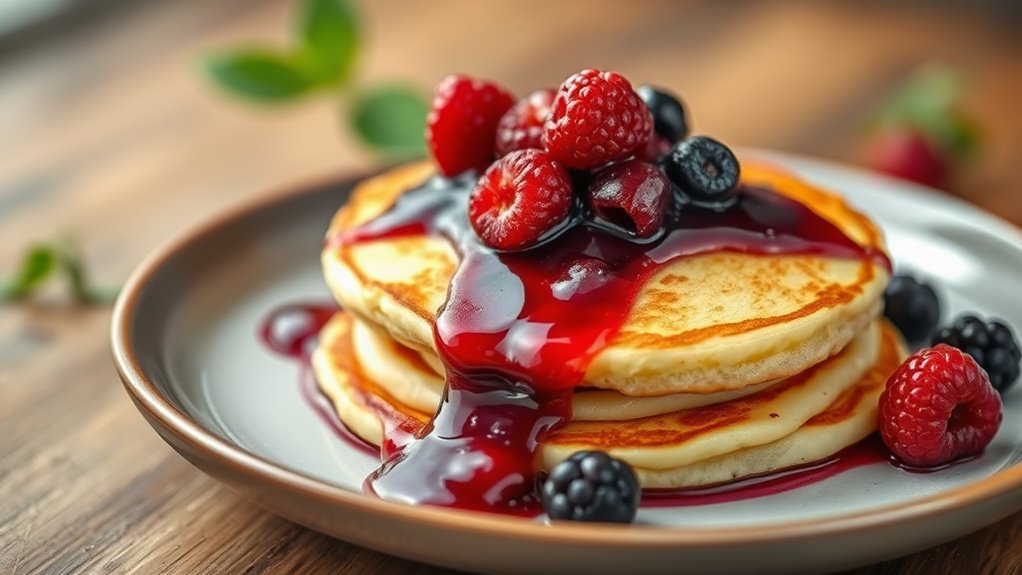
- Fresh berries (strawberries, blueberries, raspberries) add a burst of freshness.
- A drizzle of maple syrup or honey.
- A dollop of whipped cream or a spoonful of homemade apple sauce.
- For a savory twist, a sprinkle of cheese and herbs, or even a fried egg, can be delightful.
